// Date added to the website; the source PDF does not specify a publication date.
Communication and Ornamentation
By Mayank Prasoon Tirkey
Among designers and architects, ornamentation has always been a divisive topic. Some defend it as a beacon of individuality or as a narrative tool, while others despise it to the core. Only analysing ornamentation from a functional point of view can omit emotional and cultural reasoning. By approaching it through an interdisciplinary framework, we can add dimensions that are often ignored.
In this essay, I want to explore ornamentation as both a narrative tool? and a branding tool. I will consider how narrative, branding, individualism, identity, and memory sustain ornamentation, while countering Adolf’s belief that ornamentation is a crime (Loss 1908) by examining it through the lens of cultural superiority, economics, and technological change in the 21st century.
Form and Function
Form, as a term, has many definitions and meanings. But for this essay, I want to examine Form in terms of its close relationship with the function it serves.
Let's take an example of a tea kettle. There are objects that are made by human beings. These artifacts often serve a specific purpose. Like the kettle that exists to make tea. It is also possible to cook Maggie? in a kettle, but making tea is what the kettle is perfected for. We can say that the kettle is designed to make and serve tea — That is the function of the tea kettle.
The kettle has a specific form to perform this activity, which was decided by its maker. In most cases, it is a spherical-shaped hollow container with a long trunk-like pipe called a spout, a lid, and a handle that forms the kettle. We can represent the elements of this form in the following ways.
Kettle = Hollow Container + Spout + Lid + Handle
Each of these elements serves a very specific purpose for the person using it. Without these elements, the form will lose its utility.
Any form can be a kettle as long as it can make and serve tea. But some forms do it the best, which we call a kettle.
Anything beyond the core functional elements of a kettle is merely decorative or something that is non-essential. The color of the kettle won’t impact the speed or efficiency of making and serving tea. We can say the same thing about the beautiful engraving on it.
Many things in our day-to-day life are like a kettle. The beautiful gold foiling on a hardcover book isn’t going to change the way one reads the book. The same can be said about a building, a car, or even one’s desk, which is filled with all kinds of decorative items.
If ornamentation serves no purpose, we must ask: why do we have it? More fundamentally, do we even need ornamentation at all?
Problem of a functional definition.
What even is a function, and who is this function serving? Can someone’s trash be someone else’s gold? Are there universally useless things? Is narrative also part of these useless things that don’t serve a purpose? Who decides what is useful, and for whom do they decide?
This is the central problem I have with defining Form solely in terms of its utility or function. When we reduce a Form to its function, we narrow down its scope and ignore the contexts in which it might take on entirely different meanings. What appears non-essential to one group may fulfill a deep-rooted symbolic or cultural purpose for another, and without proper cultural and historical context, these forms and ornamentation can appear a waste of resources.
Fordlandia
Based on a report by Reed (The Guardian, 19 Aug 2016), During the 1920s, the founder of the Ford Motor Company and an American Industrialist, Henry Ford, started a project in Brazil where he established a Rubber plantation that would compete against England over the world’s rubber market domination.
On July 21, 1927, Henry Ford was given a free land concession of 2.5 million acres along the Tapajos River. The Jungle was cleared to build houses in the image of Houses and urban planning of Dearborn, Michigan, the hometown of the Ford Motor Company and Henry Ford himself (Fig 1). The City was named Fordlandia.
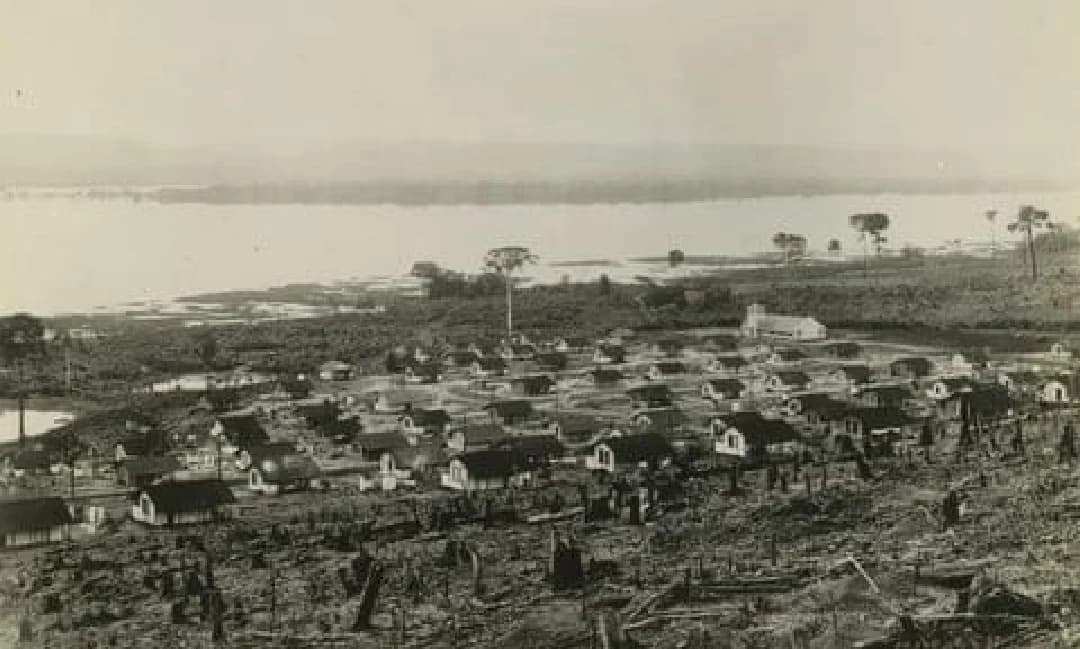
But the troubles started to appear. Like soil erosion, drought, diseases, and pests, which were all destroying the plantation. In addition to that, the American lifestyle being enforced on the local workers was not going well. The American food, lifestyle, recreation, and housing were very different from what the locals were used to. The architecture of Local communities already accounted for the elements of the Amazon’s ecosystem.
There were additional riots, and later the plantation was sold to the Brazilian government for far less than what it had cost Ford.
The story of Fordlandia is about an American who seeks to revolutionize the world by introducing something he believes is better. His beliefs were based on his own place of origin. By ignoring the local culture and lifestyle, Ford made a huge mistake that resulted in so many of these problems.
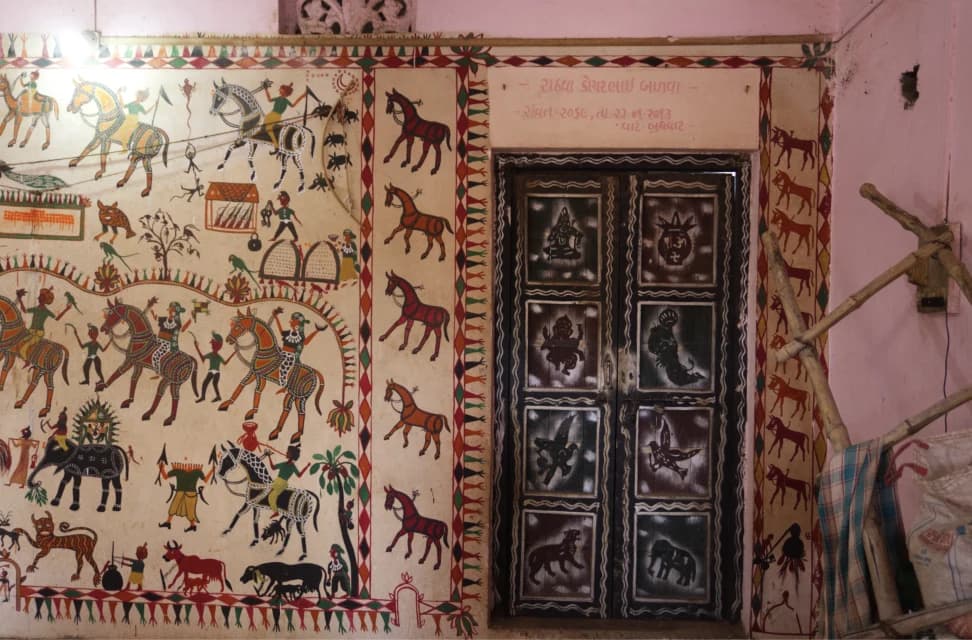
Let's take an example from Jharkhand. In Jharkhand, among the Santhal tribe, there is a culture of drawing really intricate and beautiful murals on the mud walls. These paintings are called Sohrai paintings, done during the Sohrai festival during the month of autumn after the rainy season.
It is common for people who don’t belong to the community to look at the mural on the wall as just a decoration (Fig 2). But for the people, it's part of their identity. It is also a way for the community to come together and share knowledge with younger members of the community, who are participating in the painting process. Today, in many villages, the traditional Sohrai painting has been replaced by a completely different design, which is much more geometric. But the core remains the same.
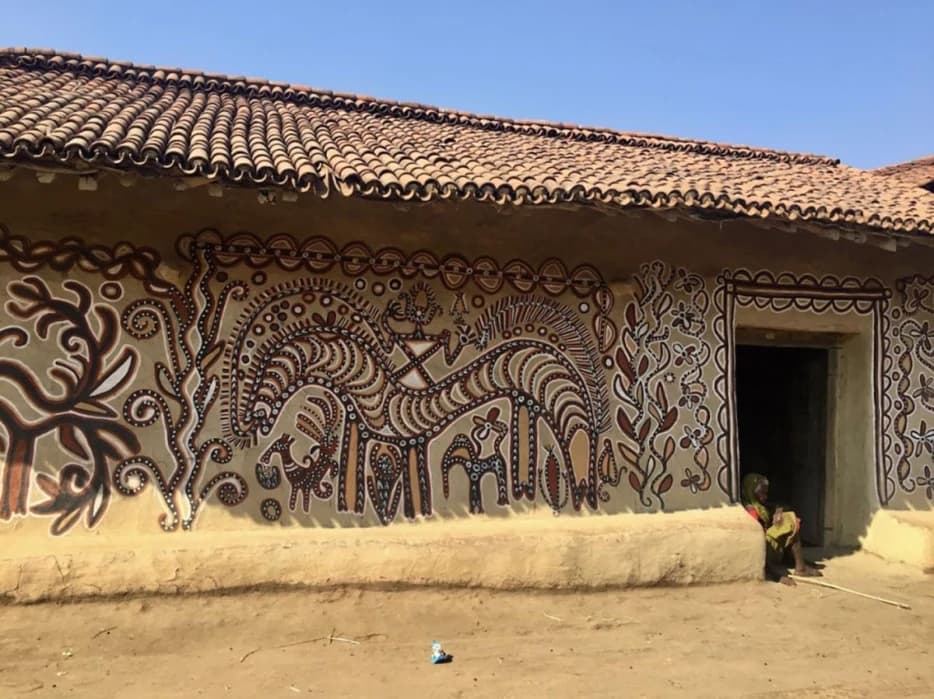
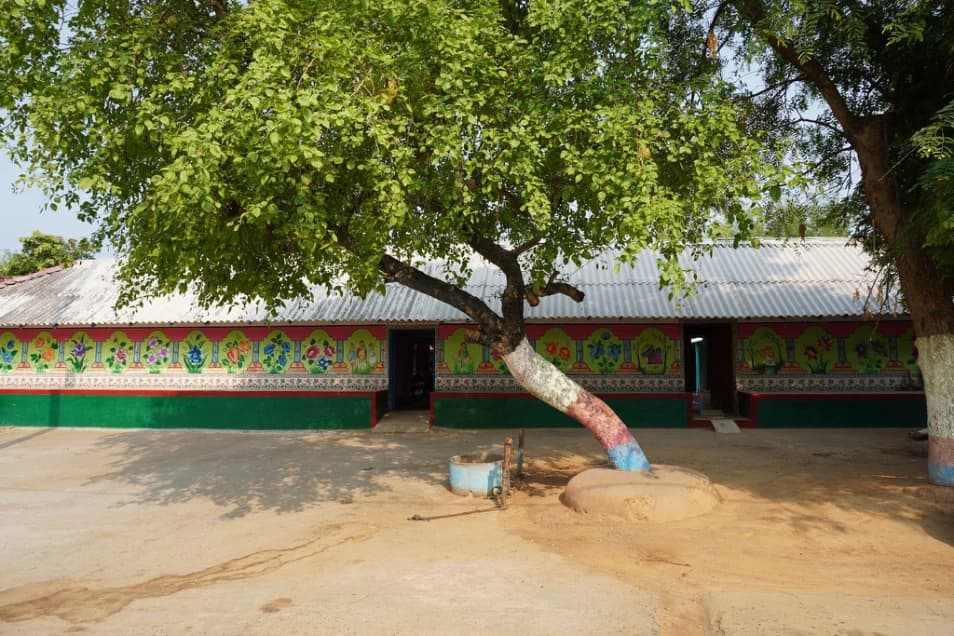
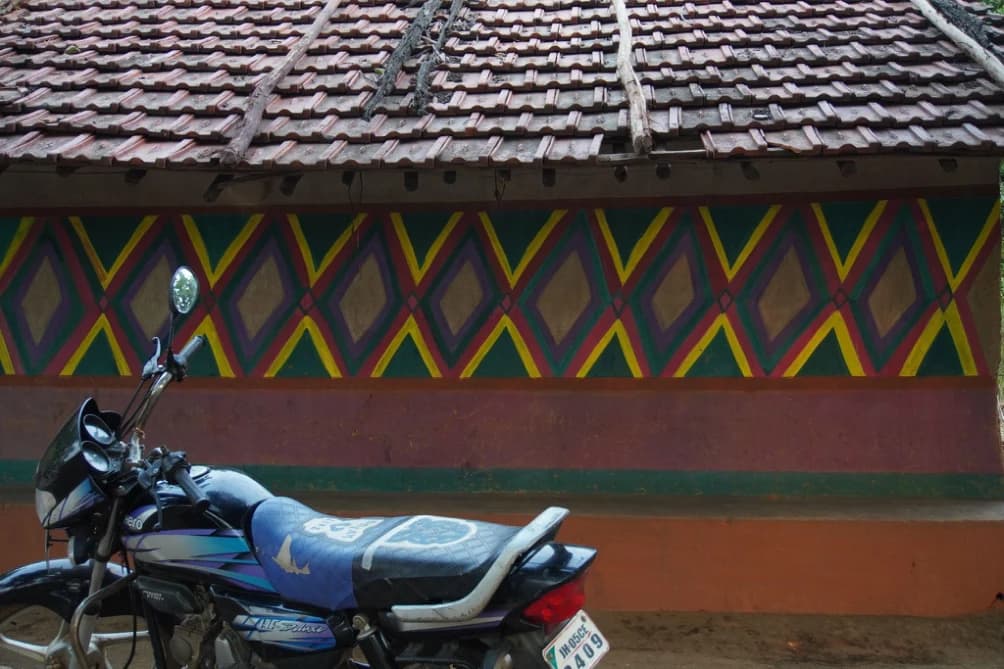
Here, the function of ornamentation lies in the creation and communication of identity as well as a tool for the sharing of knowledge. If the process of mural painting is removed, it will impact the knowledge system of the community.
Adolf Loos’s essay Ornament and Crime (1908) dismisses ornamentation as something regressive without considering the cultural and symbolic meaning of the practice. His argument completely ignored the cultural context of those ornaments and positioned them as something wasteful. It will be very problematic to look at ornamentation solely through a narrow utilitarian lens.?
To say what is “right” and “wrong” or as “modern” and “primitive” is something that I see as an argument which is suggesting a universal value, especially in the case of the Function, leading to the arguments of what is important and what is not. This scale is fundamentally rooted in an ethnocentric perspective, where one puts their culture as a reference material to judge and weigh others' cultures, while at the same time ignoring the social, cultural, and historical conditions that led to the culture being judged.?
Not only that, but the idea of a universal goal post that all cultures have to reach, like a universal linear evolution of culture, from savage to civilized. In my view is the foundation of the narrow and conflated view on Function.
In the words of Loos, “[...] What is natural to the Papuan and the child is a symptom of degeneracy in the modern adult. I have made the following discovery and I pass it on to the world: The evolution of culture is synonymous with the removal of ornamentation from utilitarian objects.”(Loos, 1908)
Role of Ornamentation as an amplifier
Drawing from the model of communication, originally developed by Shannon and Weaver (1949) and later illustrated in the film A Communications Primer (Eames & Eames, 1953). We can solidify the role of ornamentation as an amplifier.
We use a much simpler version of the model to illustrate this.
Sender → medium → receiver
The sender transmits a message to the receiver through a medium. During this process, noise may be introduced, which makes it difficult for the receiver to interpret the message accurately. By repeating the message multiple times, we can help counteract the effects of this noise and improve understanding.
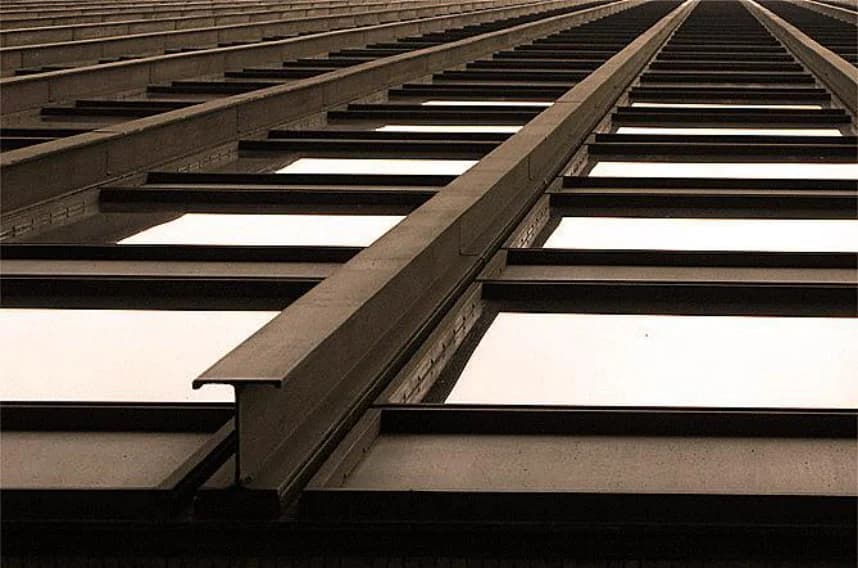
Ornamentation can act the same way. It can act as an amplifier to the idea that the designer or the architect wants to communicate, whether it is the idea of comfort offered by a hotel or in a museum, the story of the artifact it contains. Farshid Moussavi observed that, in the case of the Seagram headquarters in Manhattan (see Fig. 6), New York, “The Seagram headquarters carefully attaches I-beams to its cladding layer to build a vertical affect.” (Moussavi, 2006, p. 5).
Scope of ornamentation
To truly understand what is ornamentation we need to look at it from different perspectives like what is ornamentation in different mediums whether it is your grandma’s beautiful chinaware or the fancy box in which your diwali sweets come in.

By the logic of “ornamentation is a tool of communication and something that goes beyond the core functionality of the form”. What would be ornamentation in say an animation? Maybe the opening music? We don’t need to watch it. It does not add anything to the plot of the story. But that catchy music becomes part of many people's memories. The title song in a way becomes part of the identity of the tv show.

We can also get into things that are far away from architecture like Game Design. There are games in the pokemon Franchise where the player’s pokemon can follow them while they walk.? It doesn’t add anything to the gameplay. It is an ornamentation that communicates the idea that pokemon is part of your team. (Bulbapedia, 2025)
Individuality and Ornamentation
Sullivan emphasizes a lot on the uniqueness and individuality of a building. In his words, “ … buildings should possess an individuality as marked as that which exists among men, making them distinctly separable from each other … Mere difference in outward form does not constitute individuality. For this, a harmonious inner character is necessary; and as we speak of human nature, we may by analogy apply a similar phrase to buildings.” (1892 p. 5)
In my view, unique ornamentation provides an individual identity to the building that the architect of the building wants to communicate. If more buildings have the same or similar ornamentation, we can say it creates a visual identity for the whole country. Let's look at a small hamlet of Ghatshilla. In Fig. 9 A simple red strip painted at the bottom of the house acts like a symbol that represents the people of the community; A brand of sorts.
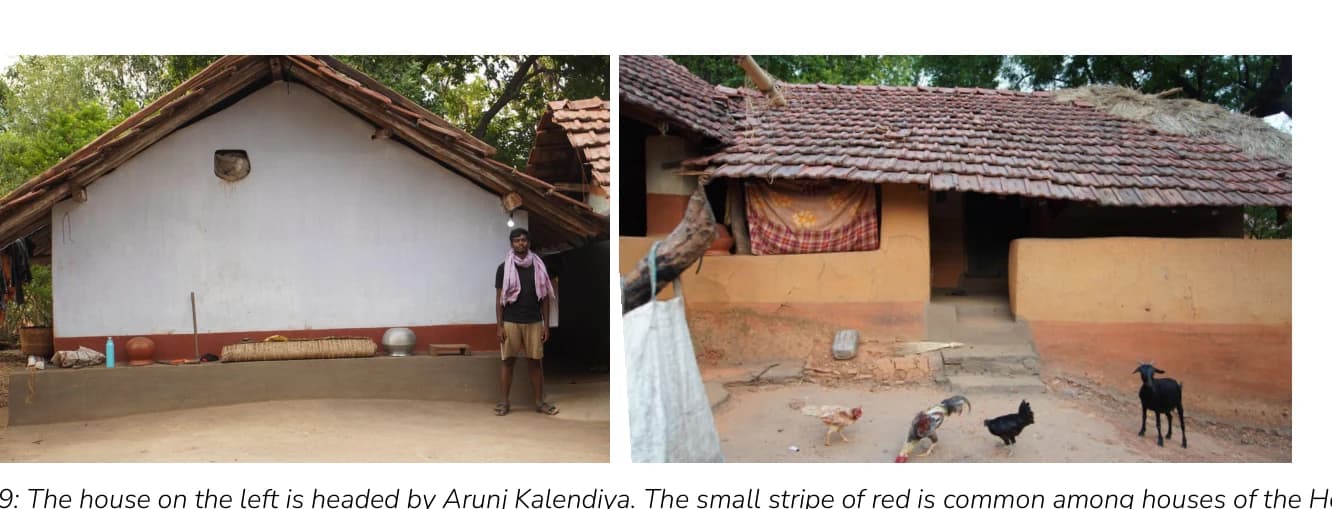
We strive to express ourselves through things around us. By changing our surroundings, we express what's inside of us. We paint the wall to reflect us. Our clothes also change with how we are feeling that day. Ornamentation and Decor are a reflection of an individual's aspirations.
Ornamentation can turn an individual's individuality into an individual's narrative; A personal Brand of sorts. Style and personal expression are the protagonists of this story.
Narrative
The narrative in any form of decoration goes beyond the decoration itself. It seeps into the process of making.
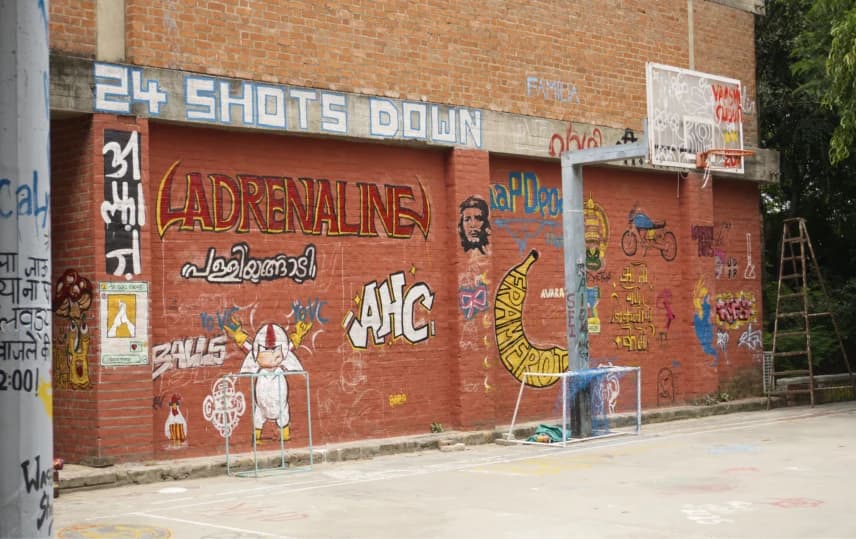
The desire to decorate the wall is not just limited to remote villages but also to places around us. During a yearly festival of the National Institute of Design called Monsoon Fiesta, students come together to decorate the basketball court (Paint the BBC) as seen on Fig. 10. The activity is not just to decorate the wall and personalize the space. But also gives an opportunity for the students to come together and share stories, exchange ideas, and express themselves like a pre-revolution French salon. The space for creative self-expression transforms into a space of public discussion. The value generated by the interaction of students is far more valuable than the naked wall and the cost of paint itself.
It provides a space to talk about problems and express themself. The discussion could range from anything, like water filters giving students typhoid, to problems with the administration. Here, similar to the Santhal Tribe in Jharkhand, the process and the stories generated matter more than the output.

Ornamentation and Economic Value
The prominent critique against ornamentation usually relies on capitalistic economic systems, where the utility and value are held prominent, and the justification against ornamentation usually boils down to the costs of production rather than narrative importance.
In a free market where two objects, let's say a kettle, have identical purposes, which is making tea. For one kettle to be ornamented with gold and another kettle to be undecorated can result in a huge price difference. By the logic of Adolf Loos (1970, pp. 21–24), the undecorated kettle that is cheaper will outsell the ornamented kettle.
On the surface, which seems reasonable. Why pay for more when the functionality is the same?
But in reality, people do pay more for ornamentation. Fine dining restaurants exist where we pay for the ornamental experience more than the food itself. Why not just eat boiled potatoes if the purpose of food is just to survive?
The Ability to afford depends solely on the socio-economic class the consumer belongs to and the value the product is generating for the consumer. The consumer doesn’t always make a decision based on a product's utility. As mentioned before, the value of utility itself can vary person to person.
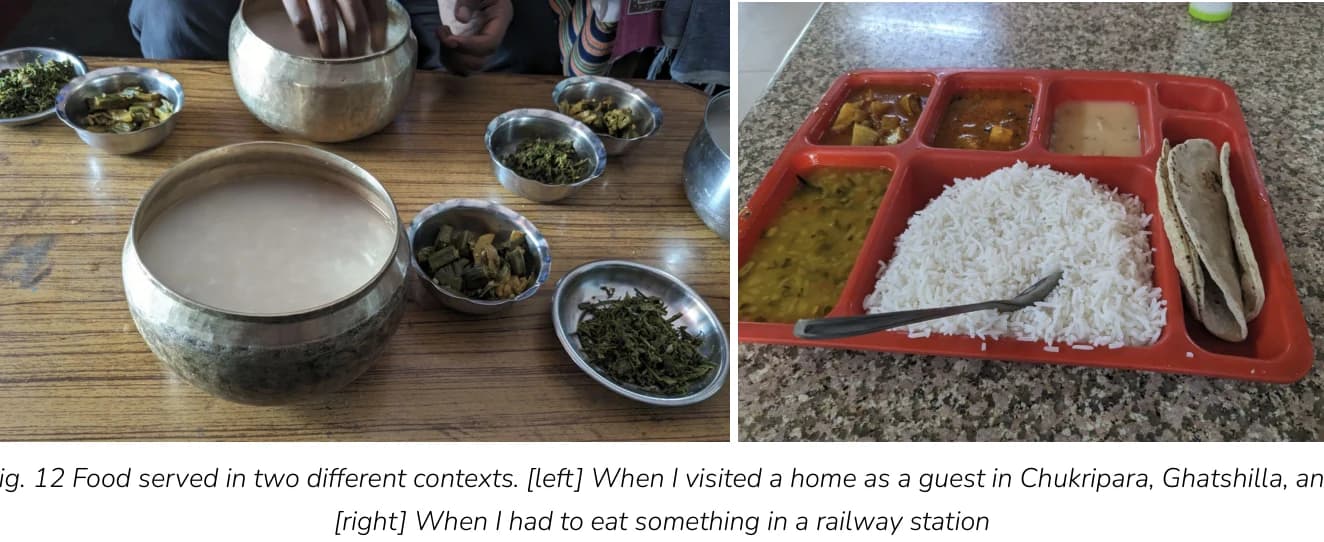
If we look at Fig. 10 on the left, a vessel made of Brass metal is used for serving Damari (rice with its water used for boiling) to the guests in Jharkhand.? There is no empirical reason to have a brass metal; it's not going to change the taste or nutritional properties of the food. But it is a cultural signifier and a narrative tool that makes the guest feel special and important.
Compared to the food on the Right, which is from a railway cafeteria meant to keep the “consumer” alive for another day. There is no narrative or cultural significance to it. Or in other words, we can say the food has been stripped from its ornamentation and made in the most cost-efficient way possible.
Adolf believes that ornamentation is a crime against the national economy. Why waste hard-earned money on ornamentation when one can add 5 more beds in a hospital? But I think, similar to fine dining, the ornamentation in public buildings can be targeted at someone else — Foreign tourists. If everything is built on utilitarian values, the uniqueness and individuality of a country will be lost. Ornamentation could be used to give a national identity to a public building. Raw brutalism can’t achieve that. As form alone can’t create individuality (Sullivan 1892).
We know a bridge is from Prague not just because of the form and structure, but also because of the details in the ornaments present on the bridge. The cost of construction and maintenance of such a building can be high, but it is worth it as it gives an architectural identity to the people of Prague.
One crucial thing that Adolf omits when talking about ornamentation in relation to the economic value is the possibility of monetisation of these ornamentations through urban tourism. These ornamentations give an individual voice to these buildings. 49 million people traveled to visit Italy in 2022, generating over $ 44 billion in revenue for that year. Even though there is no comparative study that can tell the definitive amount of contribution that these ornamentation makes. But the absence of this ornamentation will have an impact on the appeal and, subsequently, the revenue of these cities.
Change in technology
A lot of the critique of ornamentation, like Adolf was written in 1908, way before the invention of the first vacuum tube. We in the 21st century now have far more advanced technology and digital fabrication techniques like laser cutting, 5-axis CNC milling, 3D printers, and advanced composite materials that the people back in those times didn’t have.
Manufacturing complex and intricate products on a large scale has been easier than before, and it will get easier as time goes on. It is now possible to CNC a beautiful Kettle with the most intricate designs, which would have taken months of hard work and years of training for a traditional craftsman.
Let's take another example: Type design. Back in the olden days, when the type foundry would require actual physical typeface to be cut from a metal block, it would not make sense to make typeface with a detailed design from a cost perspective. But with computers, one can make and use as complex a type as possible, digitally. Like the Jokerman typeface.
Our perception of the future is often based on things that are currently the latest. I can confidently say that I don’t know what the transportation system will look like in the future — say, like 500 years from now. Maybe we would have harnessed the power of atomic fusion and would now be able to produce energy that slingshots us into space.
Adolf says, “Omission of ornament results in a reduction in manufacturing time and a wage increase. The Chinese carver works for sixteen hours, the American worker for eight.” (1908, p. 22) Thus trying to position ornament as that causes the increased workhour and wasteful use material. This is something that is based on the availability of technology of that time.
The way I look at it is we shouldn’t make absolute and universal claims about Function based on the constraints offered by the current age. Whether to have or not to have ornamentation is a question of human desire and not a question of human capability. It is possible that today, something might take time, but without the foresight into the future, we can’t say it will take time.
Conclusion
Whether to ornament or not to ornament is an act of personal choice rather than an ethical dilemma as presented by Adolf Loos (Loos, 1998).
And how we ornament should come from what we want to communicate, and the narrative reasoning to have ornaments drastically outweighs the arguments to just get rid of it. Ornaments can be things beyond a functionless baggage on the taxpayer, but a tool for nation-building and national identity.
Arguing based on function is problematic in itself.
We should not just look at the end product of ornamentation but also the importance of the process by which we make the ornaments, as they hold great importance in themselves.
Notes
-
The term narrative tool has been used very loosely to talk about something that aids in creating narrative.
-
Maggie is an instant noodle created by Nestlé, which is popular among students in India. A lot of college students use a kettle to cook Maggie. Due to the lack of a kitchen in many hostel spaces, the kettle has to take up an additional function for a student.
-
The definition of utilitarianism used here is the common definition from the domain of design, which is about putting function (utility) over aesthetics; the term is borrowed from Philosophy, which talks about ‘achieving the greatest possible happiness for the greatest number of people’.
-
Ethnocentrism, a term originally used in sociology, is the belief that the people, customs, and traditions of your own race or country are better than those of other races or countries. Here, I have used it in the context of design to highlight how the designers, when designing something, often ignore local cultural context and arrive at a form that is, in their perspective, the best for the people.
-
Pokemon Yellow is a JRPG and follows the common JRPG structure where the player collects members in the party, leveling system, turn based combat. The addition of a party member just waking behind the player doesn’t add much to this game specifically. In later games with a more complex bonding system this mechanic became the core feature of the game.
-
Damari is a local food of Jharkhand, Bihar, West Bengal, and Odisha. The food is part of the staple diet of the communities of this region. Among the tribal communities, it is a common practice to offer guests food in utensils made of brass. I have seen this practice of using brass utensils for guests even in some other places, like in the Rabari community in the northern part of Gujarat near the border of Rajasthan.
Reference
Bulbapedia. (2025, August 8). Walking Pokémon - Bulbapedia, the community-driven Pokémon encyclopedia. Bulbapedia. https://bulbapedia.bulbagarden.net/wiki/Walking_Pok%C3%A9mon
Conrads, U. (1964). Programs and Manifestoes of 20th-century Architecture.
Farshid Moussavi. (2009). Function of ornament. Actarbirkhauser.
Loos, A. (n.d.). Ornament and Crime. Penguin. (Original work published 1908)
Reed, D. (2016, August 19). Lost cities #10: Fordlandia – the failure of Henry Ford’s utopian city in the Amazon. The Guardian; The Guardian. https://www.theguardian.com/cities/2016/aug/19/lost-cities-10-fordlandia-failure-henry-ford-amazon?CMP=fb_gu
R / D. (2014). R / D. https://www.readingdesign.org/ornament-in-architecture
The 1950s Channel ∗ Retro Peacock TV (Director). (2014, August 18). A Communications Primer: By Ray and Charles Eames (1953) [Video recording]. https://www.youtube.com/watch?v=1yr7MIyppHc